
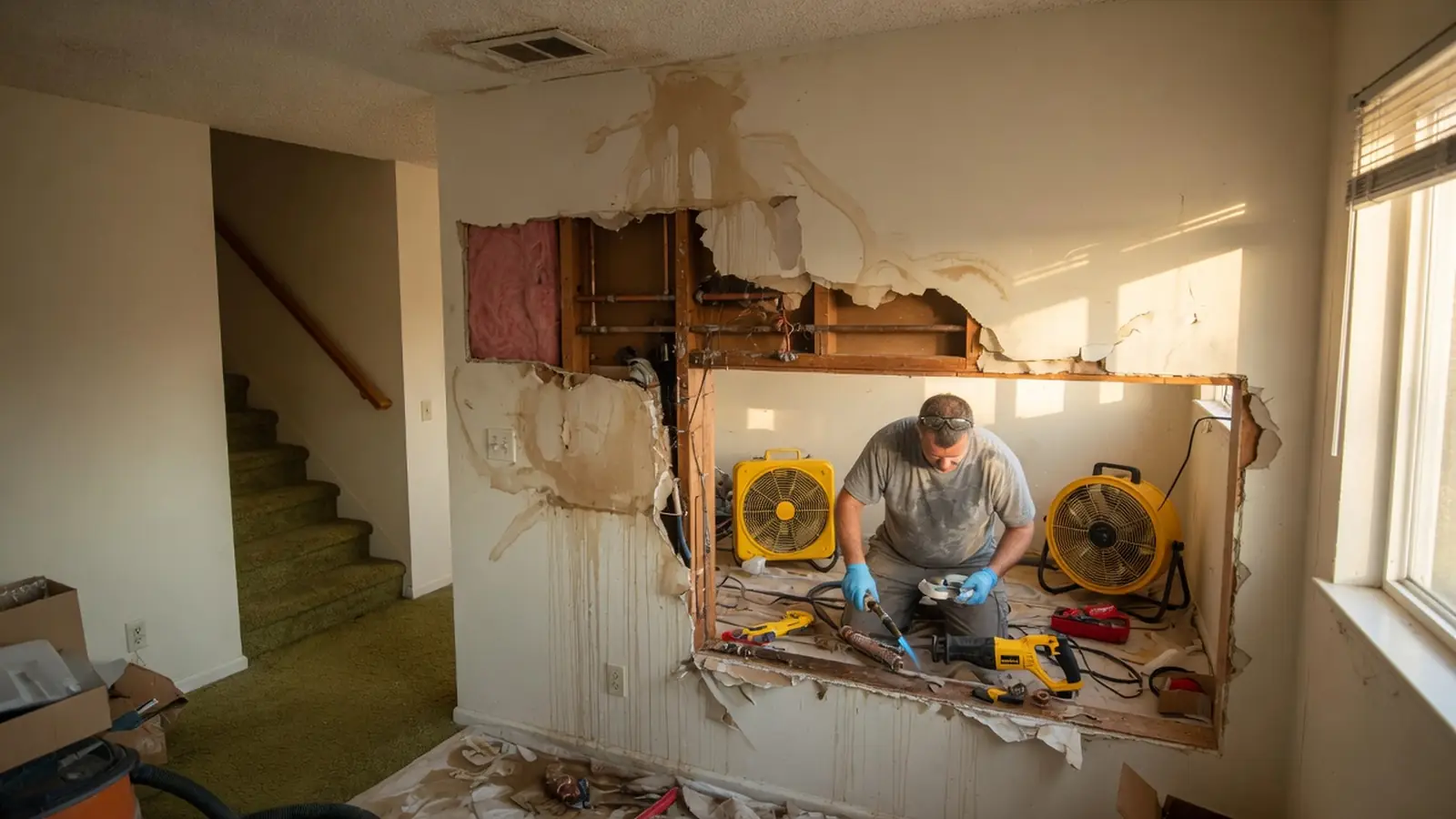
Santa Rosa Storm Damage
Severe windstorms can cause sudden roof leaks, resulting in sagging drywall ceilings holding trapped water and saturated attic insulation. Storm restoration crews prioritize immediate roof tarping and board-up to halt active water intrusion before initiating structural drying and thermal moisture mapping.
Call (707) 555-0142 if it's actively dripping.
Trusted Storm Recovery Specialists
When major weather systems roll through Sonoma County, relying on comprehensive structural water damage mitigation keeps framing sound and prevents long-term foundation issues.
Our crew delivers structural drying and rapid moisture extraction across neighborhoods from Rincon Valley to Roseland.
Heavily contaminated, high-severity flood jobs require specialized industrial mitigation methods that standard maintenance crews are unequipped to handle.
Homeowners often note that deploying certified extraction specialists immediately after flooding prevents standing water from saturating framing and triggering mold growth.
Dedicated project management and professional insurance claim handling prevent recovery delays and financial disputes after severe water disasters.
Every room undergoes rigorous thermal moisture inspection to confirm that framing, insulation cavities, and subfloors are completely dry before repair work starts.
Our Step-by-Step Storm Recovery Process
We deploy industrial extraction equipment and controlled airflow drying systems to eliminate flood moisture quickly and protect structural framing.
- Emergency Tarping And Assessment. Storm restoration crews prioritize immediate roof tarping and board-up to halt active water intrusion before initiating structural drying and thermal moisture mapping.
- Rapid Extraction And Crawl Space Clearance. Severe storm runoff and creek overflow can rapidly inundate low-lying crawl spaces, creating an urgent need for standing water extraction before subfloor rot occurs, making prompt basement and ground-level flood cleanup vital for structural safety.
- Industrial Structural Drying. A pattern echoed in public discussions is that framing and baseboards often retain excess moisture after drying equipment is removed, creating anxiety over whether sealing walls will trap hidden mold. Our certified drying technicians maintain continuous monitoring with calibrated meters until framing reaches target equilibrium.
- Subfloor And Foundation Sanitization. River storm surges leave standing water and silt under foundations, raising questions on proper drying protocols and salvaging framing and insulation. We flush out silt, treat subflooring with botanical antimicrobials, and maintain negative air pressure.
Guaranteed Structural Drying Standards
Extended atmospheric river storms cause widespread surface mold to spread along baseboards, exterior drywall, and window sills. Homeowners often describe lingering dampness behind baseboards, which is why scheduling certified residential mold remediation ensures hidden fungal spores are completely neutralized under strict containment. Our commitment focuses on complete moisture removal verified by calibrated instrumentation before any space is cleared.
Attic Water And Roof Leak Drying
Severe windstorms can cause sudden roof leaks, resulting in sagging drywall ceilings holding trapped water and saturated attic insulation. Does wind-driven rain soaking attic insulation always require complete insulation removal and replacement? Our technicians inspect cellulose and fiberglass thoroughly to determine whether targeted extraction or complete replacement is required.
Crawl Space Flood Extraction
Severe storm runoff and creek overflow can rapidly inundate low-lying crawl spaces, creating an urgent need for standing water extraction before subfloor rot occurs. High-volume pumps remove mud and pooled runoff swiftly.
Insurance Claim Water Mitigation
Dedicated project management and professional insurance claim handling prevent recovery delays and financial disputes after severe water disasters. We document all moisture logs and structural damage directly for your insurance adjuster.
Our Approach To Emergency Storm Mitigation
We provide rapid structural extraction and controlled drying protocols across every neighborhood we serve, prioritizing property preservation and verified moisture removal.
- 8Zip Codes Served
- 6Service Areas
- 3Services Offered
Local property owners share their firsthand experiences following severe windstorms, crawl space flooding, and emergency roof leaks handled by our mitigation specialists.
“Our first restoration outfit left wet baseboards in place and packed up while the insulation was still dripping wet. The crew came in, stripped away the damaged drywall, and set up proper dehumidifiers to completely eliminate the sour damp smell. They saved our living room framing from rotting out after that horrible winter squall.”
Marcus G.
“After heavy runoff inundated our basement through the patio doors, these guys arrived with industrial pumps within forty minutes. Their moisture testing gave us immense peace of mind, so I immediately sent their contact card to my sister when her hillside drain backed up two days later. You rarely see this level of responsiveness during a regional storm crisis.”
Elena V.
“While peeling back soaked floor padding from a ceiling leak, the crew discovered old black mold festering deep inside the adjacent wall cavity. Instead of panicking or halting progress, they contained the corridor immediately and adjusted their drying strategy without tacking on unnecessary stress. Watching them handle the surprise with calm professionalism made an overwhelming week manageable.”
Devon K.
“A sudden gully washer flooded our lower guest suite only four days before my in-laws arrived from overseas. The team ran commercial air movers around the clock, monitored hourly moisture levels, and had the subfloor bone dry in time for new carpet installation. Their dedication under an unforgiving deadline completely saved our family visit.”
Clara T.
Frequently Asked Questions
Does wind-driven rain soaking attic insulation always require complete insulation removal and replacement?
Wet attic insulation usually requires complete replacement because soaked cellulose or fiberglass mats compact, trap moisture, and foster rapid mold. When storm gales drive water under roof shingles into the attic, saturated insulation mats compress and lose their insulating R-value permanently. Leaving wet batts trapped against ceiling sheetrock breeds microbial growth and causes ceiling drywall to sag under excessive moisture weight.
How quickly should storm water in a crawl space be extracted?
Standing storm runoff must be extracted within twenty-four to forty-eight hours to stop permanent subfloor rot and prevent structural wooden decay. Severe storm runoff and creek overflow can rapidly inundate low-lying crawl spaces, creating an urgent need for standing water extraction before subfloor rot occurs. Sump pumps and commercial extractors clear water and silt before moisture wicks upward into subflooring and sill plates.
What steps are prioritized during initial storm mitigation?
Technicians prioritize immediate roof tarping and window board-up to stop ongoing water entry before deploying moisture sensors and drying blowers. Storm restoration crews prioritize immediate roof tarping and board-up to halt active water intrusion before initiating structural drying and thermal moisture mapping. Stopping incoming precipitation stabilizes indoor humidity and protects framing from further saturation.
Does insurance cover industrial drying for severe flood damage?
Most standard policies cover storm-driven water claims when documented thoroughly with moisture readings, photo proof, and detailed loss estimates. Dedicated project management and professional insurance claim handling prevent recovery delays and financial disputes after severe water disasters. Heavily contaminated, high-severity flood jobs require specialized industrial mitigation methods that standard maintenance crews are unequipped to handle.
Why is thermal moisture mapping necessary after severe storms?
Thermal moisture mapping reveals hidden pockets of trapped water behind walls and subfloors that standard visual inspections miss completely. River storm surges leave standing water and silt under foundations, raising questions on proper drying protocols and salvaging framing and insulation. Infrared thermography tracks moisture migration along baseboards and structural beams so all hidden pockets dry out completely.