
Santa Rosa Flood Cleanup
When unexpected flooding enters your living space, immediate action halts catastrophic structural damage. Our licensed crews extract standing water, eliminate contamination risks, and thoroughly dehumidify wall framing and subfloors. We work directly with your insurer to restore safe conditions without delay.
Dedicated Property Flood Recovery
Our restoration specialists bring decades of combined field experience managing sudden residential floodwaters across regional creek basins and low-lying valleys.
Homeowners often describe how severe storm runoff and creek overflow can rapidly inundate low-lying crawl spaces, creating an urgent need for standing water extraction before subfloor rot occurs.
We deploy high-volume truck extraction units to execute comprehensive structural water restoration before deep moisture weakens load-bearing framing.
Every recovery project begins with thorough thermal imaging and moisture metering to track hidden water migration through baseplates and sill joists.
Deploying certified extraction specialists immediately after flooding prevents standing water from saturating framing and triggering mold growth.
We maintain an orderly work zone with containment barriers and continuous air scrubbing to protect unimpacted living areas throughout drying.
How We Remediate Flooded Properties
A pattern echoed in public discussions is that river storm surges leave standing water and silt under foundations, raising questions on proper drying protocols and salvaging framing and insulation. When severe storms strike, our structured approach for urgent storm damage repairs ensures rapid dewatering, thorough sanitation, and verified structural stabilization.
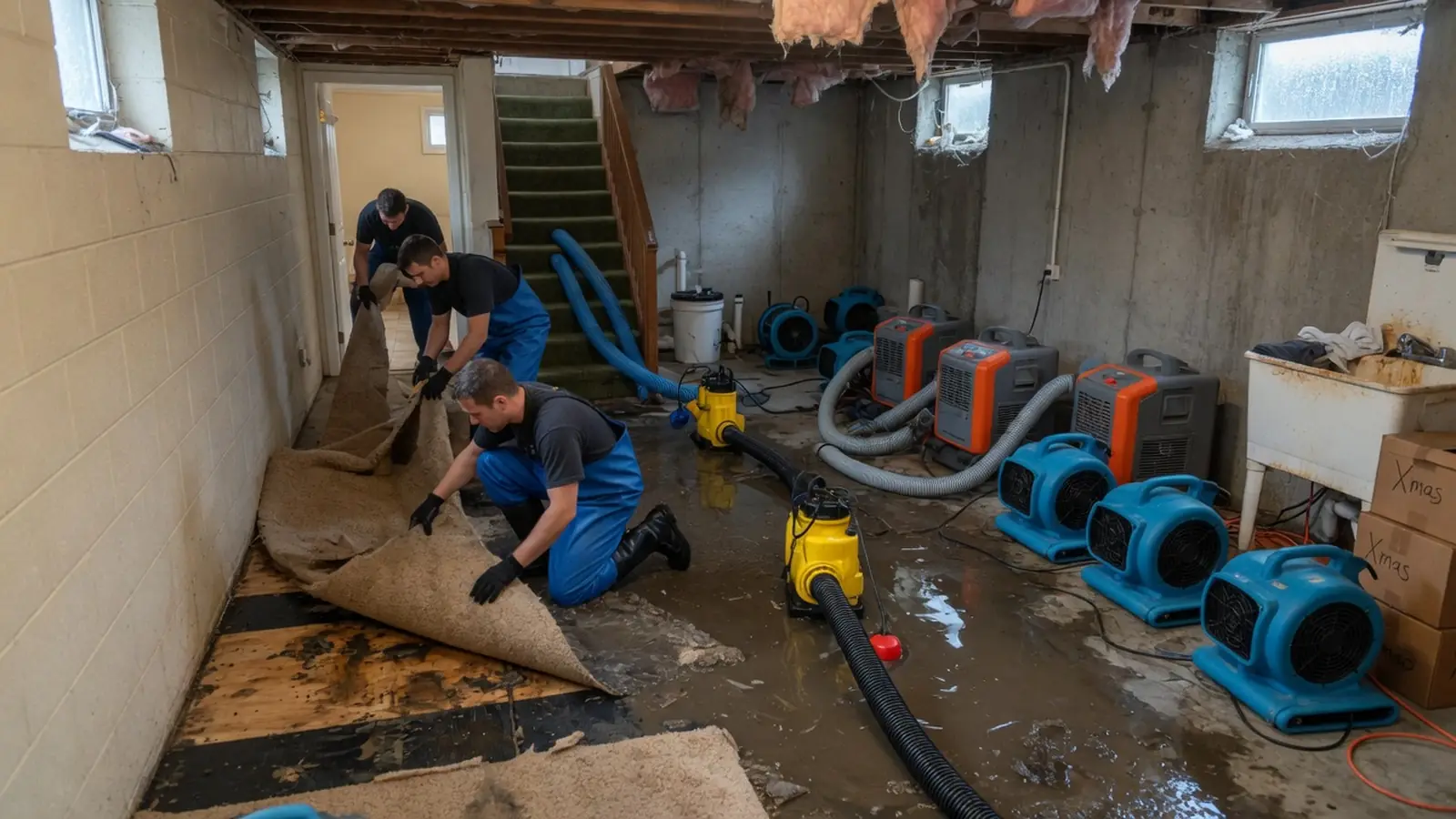
- Rapid Extraction And Foundation Dewatering. A failed sump pump during heavy rains submerges foundation footings, leaving homeowners questioning whether rented drying equipment is adequate to prevent mold. We deploy industrial submersible pumps and truck-mount extractors to remove standing floodwater within hours.
- Biohazard Removal And Porous Tear-Out. Municipal storm overflows causing sewer backups leave contaminated Category 3 water indoors, confusing homeowners about which porous materials must be removed. Our certified technicians strip unsalvageable carpet, pad, and soaked insulation to halt biohazard spread.
- Precision Flood Cuts And Cavity Ventilation. Technicians evaluate how high above the visible flood water line does drywall need to be cut away during remediation, removing compromised wallboard to expose and dry saturated interior framing.
- Controlled Industrial Dehumidification. Commercial desiccant dehumidifiers and high-velocity air movers draw deep moisture out of structural timbers, preventing long-term decay while remediating mold growth in building materials.
Dedicated Management And Direct Insurance Billing
Dedicated project management and professional insurance claim handling prevent recovery delays and financial disputes after severe water disasters. We document every phase of moisture remediation using psychrometric logging, communicating directly with your adjuster to ensure complete coverage without out-of-pocket surprises.
Industrial Flood Mitigation
Heavily contaminated, high-severity flood jobs require specialized industrial mitigation methods that standard maintenance crews are unequipped to handle. We deploy commercial-scale extraction rigs, containment chambers, and desiccant drying systems to restore severely compromised residential properties.
Foundation Footing Dewatering
Submerged foundation footings and damp crawl spaces require aggressive water removal to prevent structural settling and wood rot. Our crews extract trapped muddy water, clear silt deposits, and install antimicrobial vapor treatments across bare subfloors.
Black Water Decontamination
Municipal storm overflows causing sewer backups leave contaminated Category 3 water indoors, confusing homeowners about which porous materials must be removed. We thoroughly remove unsalvageable porous items, apply hospital-grade botanical biocides, and sanitize all hard structural surfaces.
Our Commitment To Complete Structural Restoration
We arrive on-site with commercial-grade extraction systems, industrial dehumidifiers, and thermal cameras to return moisture levels in your home to safe dry standards.
- 8Zip Codes Served
- 6Service Areas
- 3Services Offered
Read firsthand accounts from local property owners whose homes were protected and dried out following severe water emergencies.
“The flood cuts across our hallway were remarkably clean, with baseboards removed intact and every drywall seam taped flush for repainting. The crew checked subfloor moisture levels three times before packing up their air movers. You cannot even tell where the water line reached.”
Marcus T.
“After our creek backed into the lower living room, their rapid response saved our hardwood subfloors from buckling. I already gave their direct contact info to my brother over on the east side after his basement flooded last weekend. Reliable, straightforward communication from start to finish.”
Elena V.
“Pulling back the waterlogged baseboards revealed ancient galvanized piping that had begun corroding behind the insulation. The team immediately brought in specialized moisture containment barriers and coordinated the repair without delaying the structural drying schedule. Their calm professionalism turned a stressful morning into a manageable fix.”
David K.
“With an official home appraisal inspection scheduled for Friday morning, we had less than four days to dry out a flooded finished basement. The crew ran commercial desiccant dehumidifiers non-stop and completed full sanitization two hours before the appraiser walked through the door. Everything passed with zero moisture flags.”
Chloe B.
Frequently Asked Questions
How high above the visible flood water line does drywall need to be cut away during remediation?
Drywall is typically cut away twelve to twenty-four inches above the visible flood water line to prevent moisture and mold from wicking upward. This standard flood cut ensures all saturated insulation is removed and allows air movers to ventilate hidden wall framing.
How quickly must water extraction begin after an indoor flood occurs?
Emergency water extraction should begin within twenty-four to forty-eight hours to stop microbial growth and avoid permanent wood framing rot. Fast extraction pulls bulk water out before porous subfloors and structural studs absorb moisture deep into wood grains.
Can rented consumer fans dry a flooded foundation footing or crawl space?
Standard rented fans circulate surface air but lack the industrial power needed to extract moisture trapped within submerged foundation footings. Without commercial LGR or desiccant dehumidifiers pulling grains of moisture from enclosed areas, structural rot and mold remain significant risks.
Does homeowner insurance cover cleanup for floodwater and storm overflows?
Standard home policies typically require specific flood endorsements or sewer backup riders to cover water entering from external storm events. Dedicated project documentation and itemized moisture logs help streamline claims with carriers to reduce out-of-pocket friction.
What makes municipal storm overflow water hazardous to building occupants?
Municipal storm runoff carrying sewer overflow is classified as Category 3 black water containing dangerous bacteria and chemical pathogens. Any porous materials touched by this contaminated water, such as carpet pad and insulation, must be promptly cut out and safely discarded.