
Water Damage Restoration Santa Rosa CA
Winter atmospheric rivers in Sonoma County bring high winds and driving rain that exploit roof flashing failures and aging gutters, driving bulk water into attic insulation. Severe windstorms can cause sudden roof leaks, resulting in sagging drywall ceilings holding trapped water and saturated attic insulation. Our dedicated response team halts active intrusion and begins professional mitigation immediately.
Ceiling dripping now? Call (707) 555-0142.
Professional Structural Drying And Property Recovery
Living and working near the Mayacamas Mountains and Bennett Valley means preparing for fierce winter rainfall each year.
Storm restoration crews prioritize immediate roof tarping and board-up to halt active water intrusion before initiating structural drying and thermal moisture mapping.
During regional storms, a failed sump pump during heavy rains submerges foundation footings, leaving homeowners questioning whether rented drying equipment is adequate to prevent mold when handling rapid flood cleanup for ground-floor spaces.
Furthermore, recurrent seasonal water accumulation under foundations raises concerns about long-term humidity damage and whether drainage or encapsulation is required.
In older neighborhoods near Burbank Gardens, damp, musty odors behind historic plaster walls after winter storms leave homeowners uncertain about inspecting for hidden mold without structural demolition.
Our technicians deploy calibrated moisture meters and non-invasive sensors to assess damp cavities while protecting interior finishes throughout every recovery phase.
Our Systematic Water Damage Remediation
Our certified technicians follow strict structural drying standards to systematically eliminate moisture and prevent secondary microbial growth.
Explore our specialized storm damage restoration procedures designed to protect regional residential structures from severe envelope breaches.
- Immediate Containment And Emergency Tarping. Technicians secure roof breaches with durable tarps and establish negative air containment to block driving rain from entering interior living areas.
- Thermal Imaging And Moisture Mapping. Using infrared cameras and non-invasive moisture probes, the team pinpoints trapped water pockets inside subflooring, wall assemblies, and ceiling joists.
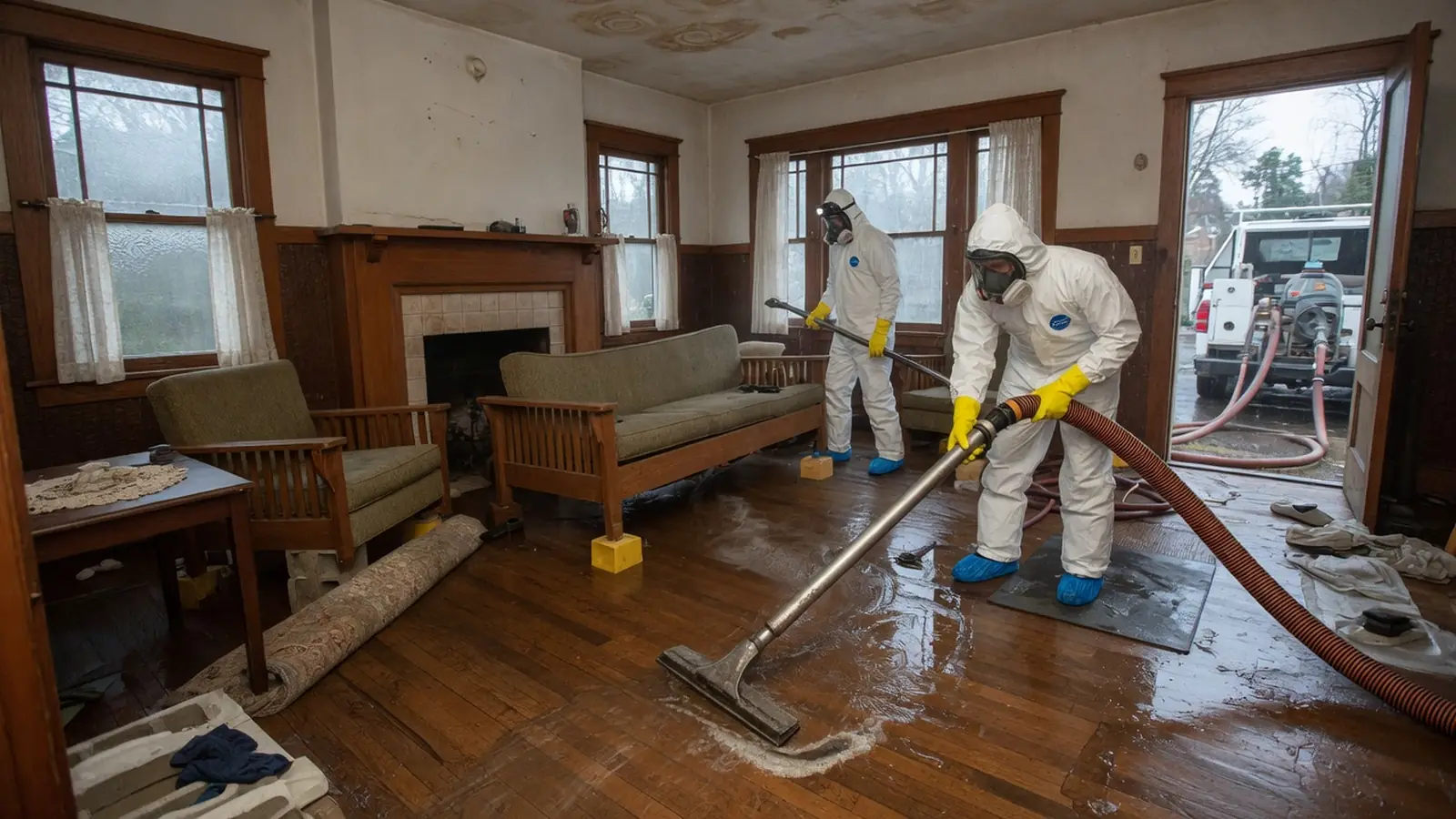
- Bulk Extraction And Saturated Material Removal. Heavy-duty truck-mounted extractors remove standing water while crews extract unsalvageable insulation and waterlogged drywall to eliminate dampness.
- Industrial Dehumidification And Verification. Commercial desiccant dehumidifiers and high-velocity air movers run continuously until calibrated daily readings confirm all framing lumber meets dry standards.
Our Thorough Drying Standard
Our restoration practices adhere strictly to industry drying benchmarks, deploying commercial air movers and continuous dehumidification to stabilize building envelopes. Technicians document structural equilibrium with daily psychrometric logs, ensuring hidden wall cavities and subflooring reach safe baseline moisture content before equipment teardown.
Emergency Water Extraction
Rapid removal of standing surface water from floors, crawl spaces, and ceilings using industrial-grade extraction pumps. This critical early intervention halts structural saturation and preserves salvageable building materials.
Attic Insulation Remediation
Targeted extraction of storm-soaked attic insulation and water-damaged ceiling drywall following severe roof leaks. Crews clean joist bays and apply anti-microbial treatments before preparing areas for fresh insulation.
Structural Cavity Dehumidification
Strategic placement of low-grain refrigerant dehumidifiers and directional air movers to extract trapped humidity from plaster, framing, and subfloors. Comprehensive moisture logs confirm structural framing reaches verified baseline dry standards.
Dedicated Property Recovery Services
Every water loss presents distinct structural challenges requiring focused technical expertise and responsive stabilization. The team concentrates on thorough diagnostic mapping and systematic drying to return properties to safe, dry conditions without compromise.
- 8Zip Codes Served
- 6Service Areas
- 3Services Offered
Homeowners throughout the valley share their honest experiences regarding our emergency mitigation response, moisture control, and structural drying services.
“Severe road washouts initially blocked access to our driveway during the storm, but the crew communicated every single hour until they safely got their trucks through. Once on site, they worked late into the night setting up drying units to stop the ceiling from buckling further. Their rapid recovery of lost time kept our house from suffering irreversible structural rot.”
Marcus B.
“Our strict subdivision board questioned the exterior generator noise on the first morning of drying. The crew handled the discussion directly with the property manager, rearranging equipment and keeping containment hoses discreetly tucked out of sight. That diplomacy prevented any neighborhood dispute while keeping our drying timeline completely on track.”
Elena R.
“Three months after water flooded our family room subfloor, the hardwood remains flat and there is zero lingering moisture smell anywhere in the house. We had an independent tester check the wall cavities recently, and the moisture readings came back totally normal. The team's thoroughness spared us a massive tear-out and gave us real peace of mind.”
David K.
“Caring for an elderly parent who uses a walker meant we could not have loose drying ducts or cables strewn across main hallways. The crew took extra time each morning to tape down heavy cables securely and maintain clear, level walking paths throughout the house. Their consideration made a stressful emergency manageable without disrupting our daily medical routine.”
Patricia M.
Frequently Asked Questions
Does wind-driven rain soaking attic insulation always require complete insulation removal and replacement?
Saturated fiberglass or cellulose insulation loses thermal resistance and requires full removal to prevent mold growth and dry the attic framing. When bulk water penetrates roof assemblies during severe storms, trapped moisture compresses insulation batts and holds moisture against structural drywall ceilings, making complete extraction the safest remediation strategy.
How quickly should professional structural drying begin after water intrusion?
Emergency mitigation should begin within 24 to 48 hours to extract bulk water and prevent widespread mold colonization inside building assemblies. Immediate deployment of commercial air movers and dehumidifiers halts moisture migration into subflooring and framing, minimizing structural degradation.
What steps happen when ceiling drywall sags from trapped water?
Technicians relieve hydrostatic pressure by controlled draining, remove compromised sheetrock, and set up directed airflow to dry joists safely. Saturated drywall cannot support its own weight once softened by attic leaks, necessitating prompt removal to protect occupants and expose hidden framing for drying.
How do restoration technicians detect hidden moisture behind plaster walls?
Crews utilize non-invasive radio frequency meters and thermal imaging cameras to track hidden moisture pockets without damaging historic walls. These diagnostic tools identify evaporative cooling patterns behind lath and plaster, pinpointing trapped water while avoiding unnecessary structural demolition.
Does homeowner insurance typically cover emergency roof tarping and structural drying?
Most standard homeowner policies cover reasonable emergency mitigation, including temporary tarping and structural drying, to limit further loss. Policyholders must take timely action to prevent secondary damage, and technicians document moisture readings and equipment logs directly for insurance claims adjusters.